“Are You Dead Yet?” – The Viral App That Asks the Question Nobody Else Does
January 2026 · 5 min read
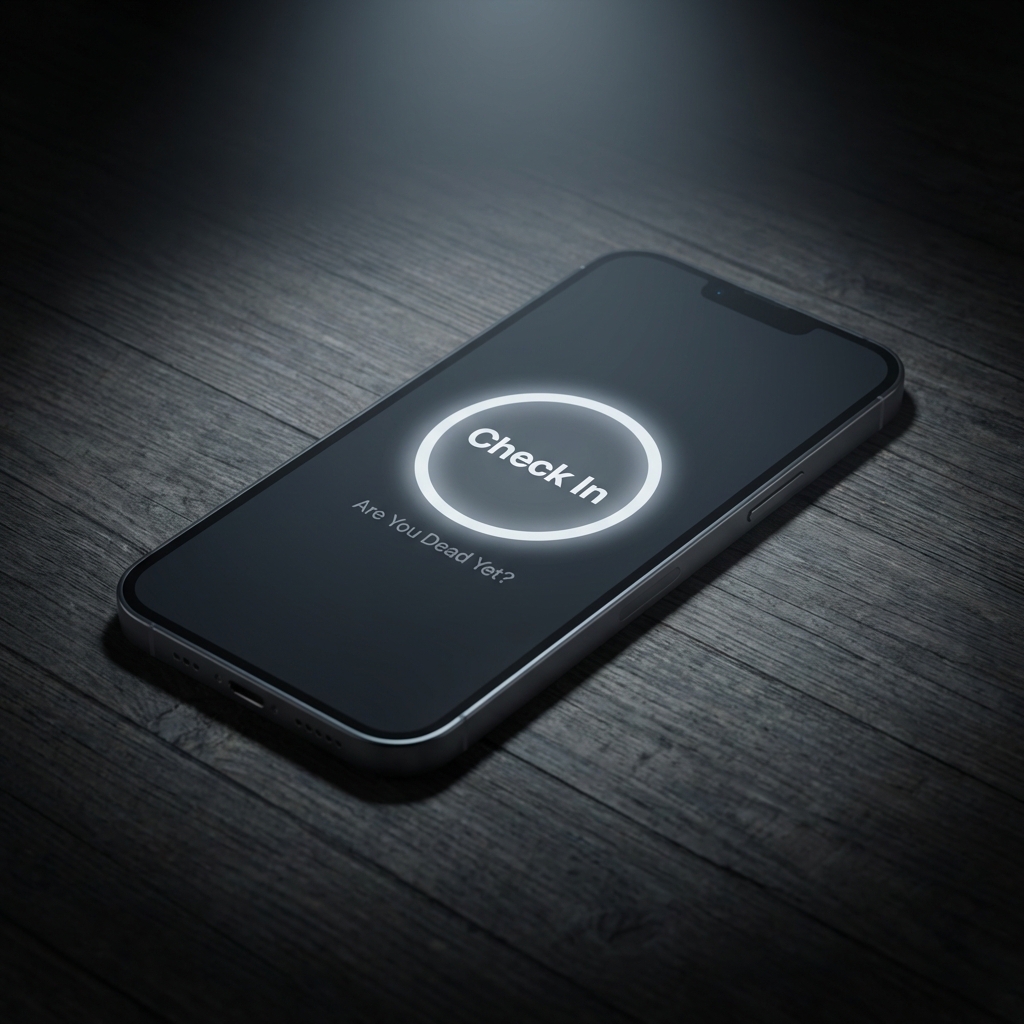
In early 2026, a small mobile app with an unsettling name quietly climbed to the top of the App Store charts in China — and then across the world. The app is called “Are You Dead Yet?”, and its premise is as blunt as its title: if you stop responding, someone will be notified.
Despite (or because of) its morbid framing, the app has gone viral, resonating with millions of people who live alone and worry about what would happen if something went wrong and no one noticed. This post explains what the app does, who built it, why it exploded in popularity, and what it says about modern life.
What Is “Are You Dead Yet?”
“Are You Dead Yet?” is a minimalist personal safety and check-in app designed primarily for people who live alone in China.
Its functionality is intentionally simple:
- The user must check in once every 48 hours by pressing a large button in the app. (In contrast, DailyOK ensures safety by requiring check-ins twice a day).
- If the user fails to check in for more than two days, the app automatically sends an alert email to a pre-defined emergency contact.
- The alert informs the contact that the user has not responded and may need help.
There is no medical monitoring, no GPS tracking, and no continuous surveillance. The app does not attempt to determine why the user failed to check in — it simply ensures that someone else is notified.
How the App Works (Step by Step)
- Install the app
- Set an emergency contact (name + email address)
- Press the “I’m alive” / check-in button every two days
- If no check-in occurs within 48 hours:
- An automated alert email is sent to the emergency contact
That’s it. No account registration, no login, no complex setup. The design philosophy is radical simplicity.
Who Developed the App?
The app was developed by Moonscape Technologies Inc., a small startup based in Henan, China.
Key facts about the development team:
- A team of three young founders, all born after 1995
- Initial development cost reportedly around 1,000 yuan (~$140 USD)
- First released in May 2025
- Built without venture capital at launch
What began as a niche utility project unexpectedly turned into a global phenomenon.
Platform Availability
- iOS (Apple App Store): YES
- Android (Google Play): NO (not yet available)
At the time of writing, the app is iOS-only. There is no official Android version, and it does not appear on Google Play. Internationally, the app is listed under the name “Demumu”, while in China it uses its original name, which translates directly to “Are You Dead?”
Pricing Model
- One-time purchase
- Price: approximately $0.99–$1.15 USD (≈ ¥8 CNY)
- No subscriptions
- No ads
- No in-app purchases
The app originally launched for free, briefly cost ¥1, and later increased to ¥8 as downloads surged and infrastructure costs increased.
Download Numbers and Popularity
Exact download figures are not publicly disclosed, but reported milestones include:
- Downloads reportedly increased 100× within 24 hours after media exposure
- Became the #1 paid app on China’s App Store in January 2026
- Ranked among top paid apps in: China, United States, Hong Kong, Singapore, Australia, and Spain
Multiple media outlets describe millions of downloads within weeks. For an app built by a tiny team with no marketing budget, this is exceptional.
Why Did It Go Viral?
Several factors contributed to its explosive growth:
1. A Growing “Living Alone” Population
China alone is projected to reach 150–200 million single-person households by 2030. Similar trends exist globally.
2. A Problem Nobody Talks About
What happens if you collapse at home and no one notices? The app addresses a fear many people have — but rarely articulate.
3. Radical Simplicity
No wearables. No subscriptions. No dashboards. Just one button.
4. Shock Value
The name “Are You Dead Yet?” is impossible to ignore, share, or forget.
Controversy Around the Name
The app’s name sparked immediate debate, especially in China. Criticism included that the wording is morbid and culturally uncomfortable, and references to death are traditionally avoided. Some users even considered it “bad luck”.
Popular alternative name suggestions included “Are You Alive?” and “Are You OK?”. Interestingly, the original name was intended as dark humor, referencing a wordplay on a popular Chinese food delivery app whose name translates to “Are You Hungry?”.
Privacy and Permissions
One reason for the app’s acceptance is its privacy-first design. Just like DailyOK, it respects user privacy:
- Does not request location access
- Does not access contacts
- Does not use GPS, camera, microphone, or sensors
It collects only emergency contact email, a user-defined name, a device identifier, and check-in timestamps. Data is used strictly for app functionality. There is no advertising, tracking, or resale of user data.
Final Thoughts
“Are You Dead Yet?” is not just an app — it is a mirror. It reflects rising loneliness, aging populations, urban isolation, and the absence of informal social safety nets.
Its success proves that extreme simplicity, when paired with a real human concern, can outperform polished, over-engineered solutions. Uncomfortable as it may sound, the question it asks is one many people quietly worry about. And that is precisely why millions downloaded it.
If you live alone, would you want someone to know if something happened to you?
Use DailyOK for a reliable, privacy-first check-in solution that keeps you safe and your loved ones worry-free.